
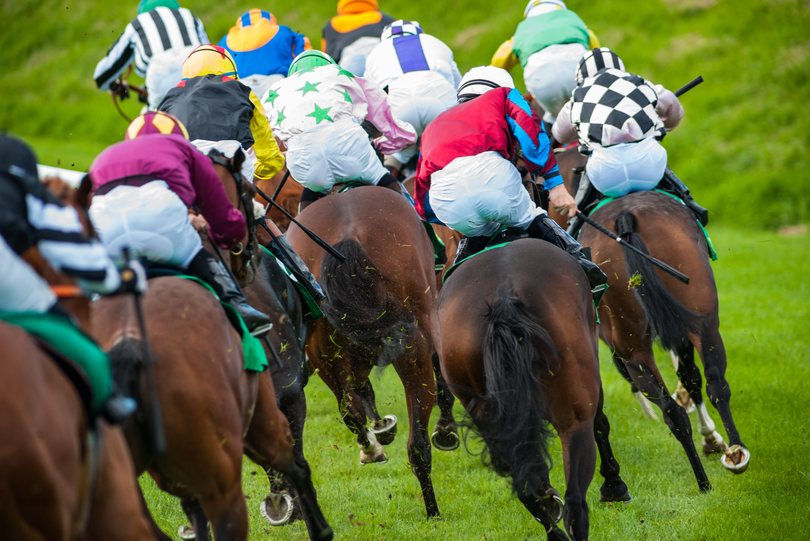
No racing operation names its horses quite like Coolmore. It is a deliberate process: Sue Magnier assigns names based on how highly the horses are rated, meaning the grandest names are reserved for the most promising individuals.
The system does not always work, as John Magnier himself has acknowledged, citing a long line of disappointing American presidents. But when it does, the results are spectacular. Current standouts Albert Einstein and Charles Darwin are the latest examples of the operation’s flair for a name that carries weight before the horse has even set foot on a racecourse.
Here, though, are five of the greatest Coolmore names of all time, and the racing achievements that made them stick. Whether you are checking prices for today’s runners or browsing the latest horse racing odds, the Coolmore machine continues to produce horses worth following.
Galileo
It is difficult to argue with this one. Named after the Renaissance astronomer who changed how humanity understood the universe, Galileo the racehorse changed how Coolmore understood its own potential. Trained by Aidan O’Brien and ridden by Michael Kinane, he won the Epsom Derby, Irish Derby, and King George VI and Queen Elizabeth Stakes in 2001 before retiring to stud, where his influence became almost impossible to overstate.
He was crowned champion sire in Great Britain and Ireland twelve consecutive times between 2010 and 2020, sired a record five Epsom Derby winners, and produced more than 100 individual Group 1 winners before his death in 2021. Few names in the history of racing have been so completely earned.
Camelot
The story behind this name is almost as good as the horse himself. Sue Magnier reportedly held Camelot in reserve for nearly a decade before a Montjeu colt from the 2009 foal crop was deemed worthy of it. The gamble paid off in spectacular fashion.
Ridden by Joseph O’Brien and trained by his father, Camelot won the 2000 Guineas, Epsom Derby, and Irish Derby in 2012, coming agonisingly close to the first Triple Crown since Nijinsky when he was narrowly denied in the St Leger. A name built for a king, given to a horse that very nearly wore the crown.
Yeats
Named after the poet W.B. Yeats, this Sadler’s Wells son did the name justice through sheer sustained excellence. Having looked like a Classic horse early in his career before injury intervened, he was reinvented as a stayer and became arguably the greatest Gold Cup horse Royal Ascot has ever seen.
He won the Ascot Gold Cup four consecutive times between 2006 and 2009, a feat that had not been achieved in over a century, and was crowned European Champion Stayer each year across that run. He has since become a leading National Hunt sire, with Noble Yeats winning the 2022 Grand National among his standout progeny. A name associated with Irish artistry, attached to a horse that became a Royal Ascot institution.
Ruler Of The World
The name alone sets expectations at an almost unreachable level. This Galileo colt delivered on them at Epsom in 2013, winning the Derby under Ryan Moore to give Aidan O’Brien an unprecedented third consecutive victory in the race. It completed a four-year sequence in which Coolmore-associated horses won the world’s most famous Flat race every single year.
John Magnier explained the naming philosophy after the win: “Sue names all the horses in February and March based on how they are rated. This horse obviously made his way to the top.” Ruler Of The World did exactly what the name implied, at least for one afternoon at Epsom.
Giant’s Causeway
Named after one of Ireland’s most dramatic natural landmarks, Giant’s Causeway earned his racing nickname the hard way. Known as “The Iron Horse” after running five consecutive Group 1 races and being beaten by a head or less in each of them before finally landing the Juddmonte International, he was one of the most tenacious horses Coolmore ever produced.
Trained by O’Brien in 2000, he won five Group 1 races across a punishing campaign that stretched from Britain to France to the United States, where he went down by a neck to Tiznow in the Breeders’ Cup Classic on dirt. At stud he became a leading sire in North America, siring Shamardal and Footstepsinthesand among his best European performers. A name built on endurance, for a horse that ran on nothing else.