
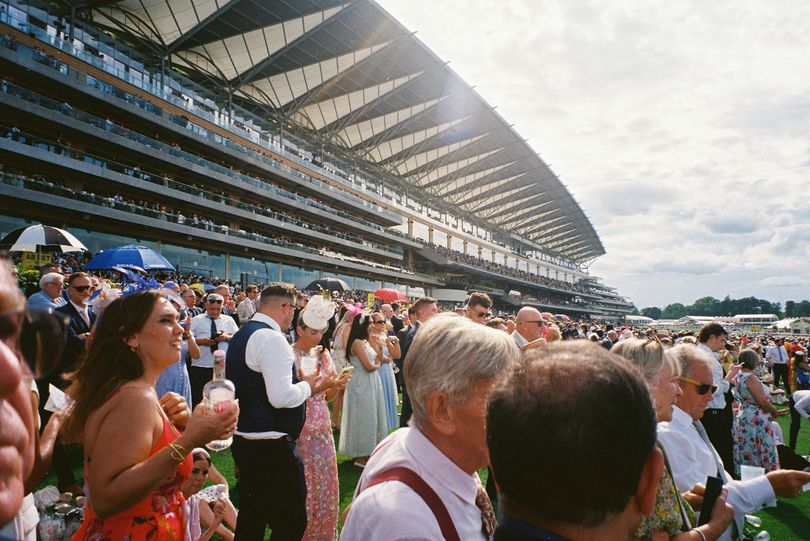
Saturday is the biggest day of the week for most British racing fans. ITV will usually be covering the best action, the major races tend to attract strong fields and there can easily be three or four meetings competing for our attention.
That gives punters plenty to get their teeth stuck into, but it also creates an obvious problem. When one race finishes and another begins ten minutes later, it is easy to place far more bets than originally intended.
There is nothing wrong with having an interest in several races. However, working out the day’s betting bank before the first one goes off makes the whole afternoon much easier to manage.
Start With the Whole Afternoon
The important figure is not necessarily the amount staked on one horse. It is the total amount risked by the time the final race has been run.
Let us say somebody is happy to spend £20 on Saturday’s racing. That £20 can be split into 20 one-pound points, allowing different stakes to be used without the overall bank constantly changing.
A stronger selection might be backed for two points, while half a point each way could be used on a bigger-priced horse in a competitive handicap. The exact figures are down to the individual punter. What matters is deciding them before a losing race creates the temptation to increase the next stake.
There Is No Need to Bet on Every ITV Race

Our Saturday racing schedule normally contains races from more than one course. Depending on the time of year, the televised programme might include a mixture of Group contests, big-field handicaps, novice races and valuable chases.
Some will be much easier to assess than others.
A horse with proven form over the course and distance may provide a solid starting point. By contrast, a two-year-old race full of lightly raced runners can involve a great deal of guesswork. Large handicaps produce attractive prices, but the number of credible contenders can make them especially difficult.
Sitting out a race is not admitting defeat. Sometimes the best decision of the afternoon is keeping the stake for a contest where the form makes more sense.
Singles and Multiples Do Different Jobs
A single bet depends on one result. An accumulator needs every selection to win, which becomes much harder as more horses are added.
The attraction of a multiple is obvious enough. A relatively small stake can produce a sizeable return if everything falls into place. The downside is that five good selections and one poor one return nothing.
The Scoop6 takes that challenge even further, asking players to find the winners of six nominated races. Following the bet can add some interest to the televised action, especially when the prize fund has rolled over, but nobody should mistake a large possible return for an easy opportunity.
For most Saturday punters, singles are easier to include within a fixed bank. A smaller amount can then be reserved for an accumulator or Scoop6 entry if desired.
Keep Different Forms Of Play Separate

Once the televised racing ends, punters may move on to football, greyhounds or another form of online entertainment. That does not mean the afternoon’s racing losses should be carried into the next activity.
An online casino contains games operating under their own rules and probabilities. There is no equivalent of studying the going, checking course form or deciding whether a trainer has found the right race for a horse. Casino play should therefore be treated separately rather than becoming another attempt to recover money lost at the races.
The same applies to a late bet at another meeting. If it was not part of the original plan, ask why it is suddenly worth backing. “Because the last horse lost” is not much of a reason.
Check The Programme Before Betting
The ITV Racing schedule sets out the meetings and races due to be shown. Looking through the programme before racing begins makes it easier to identify the contests worth studying and those that can safely be left alone.
It also allows time to compare course form, going preferences and recent performances without making a rushed decision between races.
Each-way terms deserve attention in large Saturday handicaps too. One bookmaker might offer an additional place but quote slightly shorter odds, while another provides a bigger price with the standard number of places. Punters should compare the entire offer rather than automatically choosing whichever one advertises the most places.
Do Not Let One Result Change The Plan

Nobody enjoys watching a well-backed selection get beaten by a short head. That disappointment becomes expensive only when it leads to a much larger bet in the following race.
A betting bank will not help find the winner of the Cambridgeshire, Grand National or Stewards’ Cup. What it can do is prevent one difficult result from taking control of the rest of the afternoon.
After the final race, have a quick look at what happened. Did the bets stay within the original total? Were the selections supported by form, or did the later ones become increasingly hopeful?
Saturday racing provides enough excitement without every contest carrying a bet. Pick the races that appeal, settle on the stakes beforehand and leave the rest alone. There will be another full programme next week.